
Lower Back Pain After a Car Accident: Symptoms, Causes, and Recovery
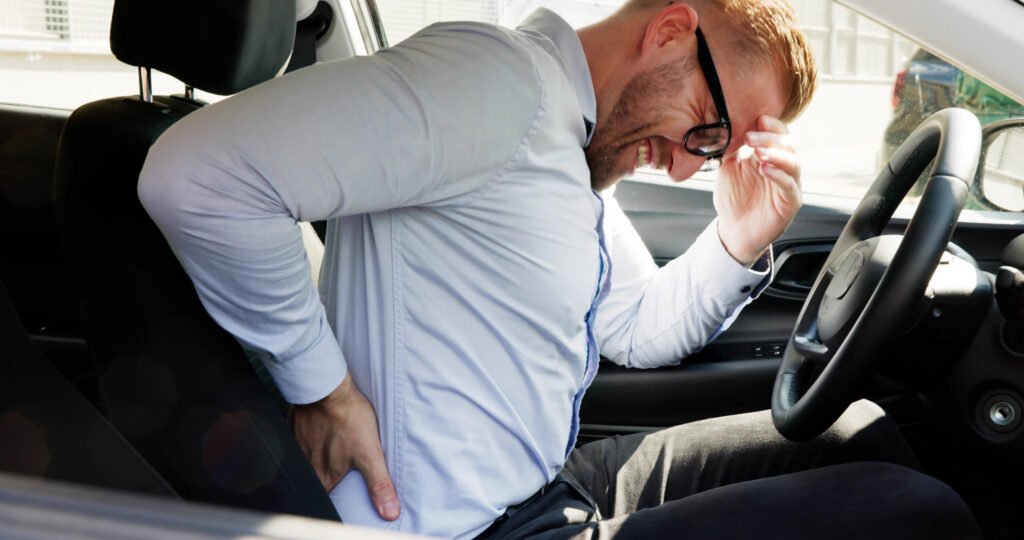
That nagging ache in your lower back after a car accident isn’t just soreness—it’s often a sign that something deeper is going on. Even minor collisions generate enough force to strain muscles, shift vertebrae, or damage the cushioning discs in your spine.
What makes these injuries frustrating is that they don’t always announce themselves right away. Pain can show up hours or days later, leaving you wondering if it’s serious or if it will just go away on its own. This guide covers the common causes of post-accident lower back pain, the symptoms to watch for, and how to find the right treatment to get back to your life.
What causes lower back pain after a car accident
Lower back pain after a car accident typically stems from lumbar strains, herniated discs, or spinal misalignment caused by the sudden impact of a collision. The force of a crash—whether you’re rear-ended, hit from the side, or involved in a head-on collision—transfers directly through your seat and into your spine. Even a minor fender bender can generate enough force to damage muscles, ligaments, and discs in your lower back.
What makes car accident injuries tricky is that symptoms often don’t appear right away. Adrenaline and stress hormones can mask pain for hours or even days. That’s why getting a medical evaluation matters, even if you walk away from the scene feeling fine.
How auto accidents injure your lower back
During a collision, your body experiences sudden deceleration and violent jolting in multiple directions. The lumbar spine—the five large vertebrae in your lower back—absorbs much of that force, which can lead to a range of injuries depending on how the accident happened.
- Rear-end collisions: Your body lurches forward while your head snaps backward, creating a whiplash effect that extends down the entire spine.
- Side-impact crashes: The lateral force bends your body sideways at high speed, placing unnatural stress on facet joints and soft tissues.
- Head-on collisions: The forward momentum compresses your vertebrae and the cushioning discs between them.
Symptoms of lower back pain from a car crash
Symptoms can vary widely in both timing and intensity. Some people feel immediate, sharp pain, while others notice only a dull ache that builds gradually over the following days.
Immediate symptoms after impact
Right after an accident, you might experience localized aching or sharp pain in the lower back, involuntary muscle spasms, or stiffness when bending, twisting, or standing upright. Any of these signs can indicate direct injury to the lumbar region.
Delayed symptoms that develop over days
It’s very common for back pain to show up hours or days after an accident. As adrenaline wears off and inflammation builds, you might notice a gradual increase in stiffness, pain radiating from the lower back into the buttocks or legs, or numbness and tingling sensations in the legs or feet.
Warning signs that require emergency care
Certain symptoms are red flags for a serious spinal injury. Go to the emergency room if you experience severe or progressively worsening pain, numbness or weakness in the legs, loss of bladder or bowel control, or an inability to stand or walk.
Why back pain can be delayed after a car accident
You might wonder why you felt fine at the scene but woke up the next morning barely able to move. This delay is actually a normal response.
During a traumatic event, your body releases adrenaline and cortisol—natural painkillers that help you respond to the emergency. As those hormones subside over the following hours or days, inflammation builds in injured tissues, and the pain becomes noticeable. This is exactly why a medical evaluation is so important even when you feel okay right after the crash.
Types of lower back injuries from a car accident
A car accident can cause several distinct types of lower back injuries. Understanding what you’re dealing with is the first step toward effective treatment.
Lumbar sprains & strains
A lumbar strain involves overstretched or torn muscles and tendons, while a lumbar sprain affects the ligaments connecting your vertebrae. Both cause pain, inflammation, and muscle spasms, and both are among the most common injuries after a collision.
Herniated & bulging discs
Intervertebral discs are gel-filled cushions between your vertebrae that act as shock absorbers. The force of an accident can cause a disc to bulge outward or rupture entirely, allowing the inner material to leak out and press on nearby nerves. When that happens, you might feel sharp pain, numbness, or tingling that radiates down your leg.
Lumbar vertebrae fractures
High-impact collisions can crack or break the bones of your lower spine. Compression fractures, where a vertebra collapses under force, are particularly common and require immediate attention.
Facet joint injuries
Facet joints are small stabilizing joints on the back of your spine that allow controlled movement like bending and twisting. The jarring impact of an accident can damage the cartilage within these joints, leading to localized pain and stiffness.
Sciatica & pinched nerves
Sciatica describes symptoms caused by pressure on the sciatic nerve, which runs from your lower back down each leg. A herniated disc or spinal misalignment can compress this nerve, causing sharp, shooting pain that radiates through the buttocks and down the leg.
Spinal stenosis from auto accident trauma
Spinal stenosis is the narrowing of the spinal canal, which puts pressure on the spinal cord and nerve roots. Trauma from a collision can cause inflammation, disc herniation, or fractures that lead to or accelerate this narrowing.
What to do for back pain after a car wreck
Taking the right steps after an accident can protect both your health and your ability to receive insurance coverage.
- Seek medical evaluation promptly: In Florida, you have 14 days from the accident to be evaluated if you want to use your PIP coverage.
- Document your symptoms: Keep a simple log of your pain levels and what makes them better or worse.
- Follow your provider’s recommendations: This may include activity modification and attending all prescribed therapy sessions.
- Keep records of your care: Maintain copies of medical reports and bills for insurance purposes.
How providers diagnose lower back injuries from car accidents
To identify the source of your pain, providers use a multi-step diagnostic process. First, a clinical evaluation assesses your range of motion, pain location, muscle strength, and neurological function. From there, imaging helps pinpoint the exact injury.
X-rays identify bone-related issues like fractures and alignment problems. MRI is the gold standard for visualizing soft tissue damage, including herniated discs and nerve compression. CT scans provide detailed bone images when complex fractures are suspected.
At RejuvenX, on-site diagnostic imaging is available at select locations, which means faster diagnosis and a more streamlined path to treatment.
Treatment for back pain after an auto accident
Effective treatment addresses the underlying injury, not just the symptoms. An integrated approach combining multiple therapies often produces better, longer-lasting results than any single treatment alone.
Chiropractic care for spinal alignment
A car accident can force vertebrae out of proper alignment, leading to nerve pressure and pain. Chiropractic adjustments use gentle, precise movements to restore alignment, relieve nerve pressure, and improve mobility.
Physiotherapy & therapeutic rehabilitation
Physiotherapy rebuilds strength, restores flexibility, and improves stability in the lower back. Your treatment plan might include manual therapy, guided stretching, core stabilization exercises, and progressive conditioning that adapts as you heal.
Pain management for persistent back pain
For complex or chronic pain that doesn’t respond to conservative treatments, specialized pain management physicians can offer advanced, minimally invasive interventions to target the source of your discomfort.
How long does back pain last after a car crash
Recovery timelines vary based on injury severity and your overall health. Here’s a general framework:
| Recovery Phase | Timeframe | Focus |
|---|---|---|
| Acute | First several weeks | Stabilizing the injury, managing pain and inflammation |
| Subacute | Several weeks to a few months | Rebuilding strength and restoring flexibility |
| Chronic | Beyond three months | Specialized care for persistent pain |
Minor soft tissue injuries may resolve in weeks, while herniated discs or fractures can take months. Early, consistent treatment typically leads to faster recovery.
What happens if back pain after a car accident goes untreated
Ignoring back pain can lead to serious long-term consequences. When an injury goes untreated, your body often creates compensatory movement patterns to avoid pain, which can strain other muscles and joints over time.
An untreated injury can develop into chronic pain, reduce your mobility, and potentially cause permanent damage. Early intervention is the best way to prevent complications.
Home care tips for lower back pain after a car accident
While professional care is essential, a few strategies can help manage discomfort between appointments:
- Gentle movement: Light activity like walking promotes blood flow and healing. Avoid prolonged bed rest.
- Ice and heat: Apply ice for 15-20 minutes during the first 48-72 hours, then switch to heat to relax muscle tension.
- Proper posture: Use a small pillow to support your lower back when sitting.
- Activity modification: Avoid heavy lifting and sudden twisting until cleared by your provider.
When to see a provider for back pain after a car accident
You don’t have to wait for severe pain to seek care. Any back pain following a collision warrants professional evaluation, especially if the pain worsens over time, you notice numbness or tingling in your legs, or the discomfort interferes with daily activities or sleep.
In Florida, you have 14 days from your accident to be evaluated and qualify for PIP coverage. Don’t wait to schedule your appointment.
Start your recovery from lower back pain at RejuvenX
At RejuvenX, we make your recovery our priority. Our integrated care model means your entire team—chiropractors, physiotherapists, and pain management specialists—works together under one roof to create a seamless treatment plan.
We offer same-day and next-day appointments across our Florida locations, and we can help coordinate transportation if your vehicle was damaged. Let us handle the details so you can focus on getting better.
FAQs about lower back pain after a car accident
If your pain developed within hours or days of the collision, it’s very likely related. A professional evaluation can confirm the connection through a physical exam and imaging if necessary.
Recovery is often still possible, though it may take longer. Early intervention typically leads to faster and more complete outcomes by addressing inflammation before it becomes chronic.
Bring your auto insurance information, accident details, a list of current symptoms, and any medical records from an emergency room or urgent care visit.
Yes, Florida’s PIP coverage is designed to cover medical care after an auto accident. To be eligible, you have to be evaluated within 14 days of the accident.
Untreated injuries can lead to chronic pain and long-term limitations. However, prompt and appropriate treatment significantly reduces this risk.